Let’s be honest: your phone isn’t just a tool anymore. It’s a persistent, demanding colleague who sits on your shoulder, tapping you on the ear every six seconds to tell you something that, truthfully, can wait until Thursday. You’re trying to build something—a layout, a draft, a strategy—and that little "ping" destroys the momentum you spent twenty minutes building.
After eleven years working in magazine editorial, I’ve seen the brightest minds burn out not because they lacked talent, but because they lost the ability to sit with their own thoughts. We’ve been conditioned to mistake "connectedness" for "productivity." It’s a lie, and it’s fueling a silent epidemic of professional exhaustion.
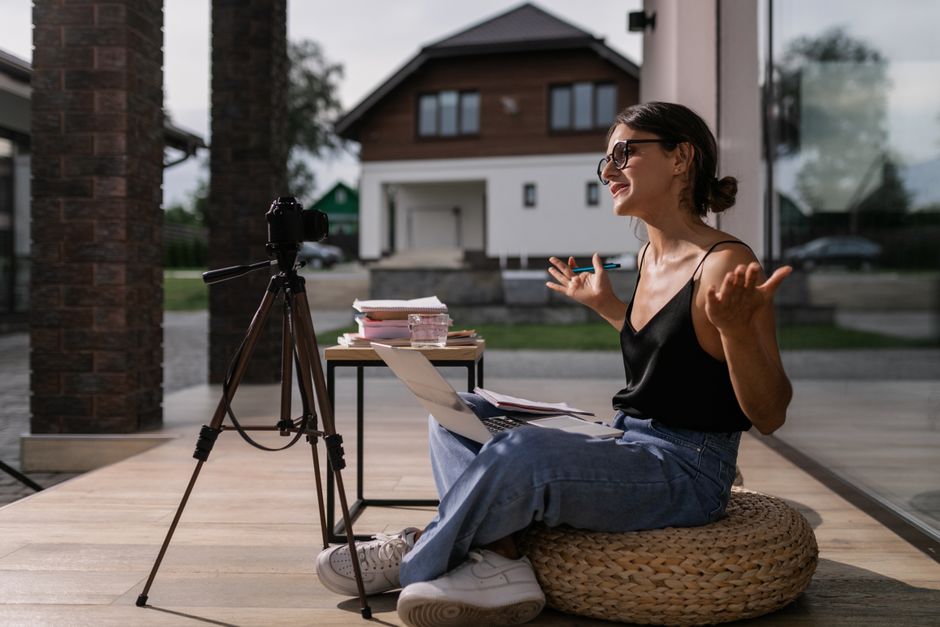
When I talk to clients, I don’t offer vague platitudes about "mindfulness." I’m interested in your workflow. I’m interested in your output. Most importantly, I’m interested in this question: What does this look like on a Tuesday at 3 p.m.?
It’s mid-afternoon. Your blood sugar is dipping, your inbox is flooded with passive-aggressive CCs, and your social media apps are screaming for attention. If your focus strategy falls apart at 3 p.m. on a Tuesday, it isn't a strategy. It’s a wish.
The Algorithm is Not Your Friend
First, let’s stop blaming yourself. You aren't "weak-willed" because you can't ignore a notification. You are a human being facing off against multi-billion dollar algorithms designed by behavioral psychologists to trigger the same dopamine spikes as a slot machine.
These algorithms don't want you to have creative focus. They want your time. Every notification you leave on—every "someone liked your post" or "breaking news" alert—is a tiny, systematic theft of your cognitive bandwidth. If an app doesn’t serve your actual work or your essential human connection, it is noise. And if it’s too noisy? I delete it. Mid-sentence, if I have to. You should, too.
Establishing Digital Boundaries: The Practical Shift
To reduce notifications effectively, you need to stop thinking about "willpower" and start thinking about "architecture." You are building a digital environment. If you wouldn't let a stranger walk into your office and scream random headlines at you every time you started writing, why are you letting your phone do it?
Your Immediate "Digital Boundary" Checklist
- The Audit: Go to your settings right now. If it’s not a direct message from a human you actually like, or an essential work tool, turn the notifications off. Not "silent," not "in a summary." Off. The "Do Not Disturb" Default: Your phone should be in Do Not Disturb mode by default during work hours. Only allow "Emergency Bypass" for calls from family. The App Purge: If you find yourself mindlessly opening an app because you’re bored, delete it. If it’s essential, you can check it on a desktop browser. Adding friction to the process is the goal.
Rituals as a Bridge into Focus
We often talk about "getting in the zone" as if it’s magic. It isn't magic; it’s a physiological response to specific cues. I’ve spent years curating a list of "tiny rituals"—actions that take under two minutes—to act as a bridge between the noise of the world and the deep work you need to do.
Ritual Name Time Required Purpose The Physical Reset 45 Seconds Close all browser tabs that aren't related to the current task. The Window Glance 30 Seconds Stare at something at least 20 feet away to relax the ocular muscles. The "Airplane Mode" Switch 10 Seconds Phone goes into the drawer. Not on the desk. In the drawer. The Breath-in-Three 60 Seconds Three deep, belly-focused breaths to signal safety to the nervous system.
When you perform these rituals, you’re signaling to your brain: "The world of input is closing. The world of creation is opening."

Wellness is Part of Creative Culture, Not a Reward
I get annoyed when people talk about "wellness" as something you do on a weekend to recover from a broken week. In a sustainable creative culture, wellness is baked into the Tuesday 3 p.m. slot. It is the refusal to sacrifice sleep for the sake of an "urgent" email that could have waited until the morning.
If you aren't sleeping well, your prefrontal cortex—the part of your brain responsible for focus and executive function—is effectively offline. You can try all the "productivity hacks" in the world, but if you’re chronically sleep-deprived, you are just running on adrenaline and caffeine. That isn't professional sustainability; that is a recipe for burnout.
Why Creative Burnout Happens
Burnout isn't just "being tired." It is the result of constant context switching. When you bounce from a document to an email to a Slack message to an Instagram notification, your brain suffers from "attention residue." You carry a bit of every task over to the next one. By the end of the day, you’ve done a thousand things poorly and nothing well. That feeling of emptiness? That’s not creative routine a lack of inspiration. That’s cognitive overload.
Building Your Sustainable Workflow
How do we move forward? We treat focus as a resource that requires protection. You wouldn't leave your wallet on a park bench; don't leave your attention on a social media feed.
Identify the Noise: Track your screen time for 24 hours. Be brutal. Identify which apps are hijacking your focus during that dreaded 3 p.m. slump. Implement the "Single-Task" Rule: Decide that for the next hour, you are only allowed one open tab. If you need to look something up, you write it down on a piece of paper and do it after the hour is up. Protect the "Tuesday at 3 p.m." Energy: Recognize when your brain usually starts to fray. Instead of pushing through with more digital stimulation, pivot to a low-tech task. Edit by hand. Sketch. Clean your workspace. Do something that doesn't involve a screen. Kill the Jargon: Stop calling it "optimization." Call it "not being a slave to a screen." Avoid corporate jargon that makes work feel like a machine. You are a creative, not an input-output processor.The Final Word on Digital Boundaries
The tech industry wants you to believe that if you aren't reachable, you aren't valuable. They want you to believe that "inspiration" is something you find by scrolling through endless feeds. They are wrong.
True inspiration comes from the space you create between the thoughts. It comes from the boredom you allow yourself to feel when you aren't reaching for your phone every time there’s a lull in the action.
Next time you find yourself stuck, unable to focus because the world is buzzing at you, remember the ritual. Put the phone in the drawer. Look at the wall. Breathe. Then, start the work that actually matters. If you’re afraid you’ll miss something important, I’ll tell you what I tell all my writers: if it’s truly that important, they’ll find another way to reach you. Everything else is just noise.
You have the power to decide what gets to occupy your head space. Start reclaiming it, one notification at a time.