I’ve spent nine years in the trenches of tier-2 esports operations. I’ve sat in draft rooms where the air is thick with the scent of stale caffeine, watching players with world-class mechanics throw away tournament brackets because their decision-making had the tactical depth of a goldfish at midnight. I’ve worked alongside sports psychologists who begged coaches to stop booking 11:00 PM blocks, only to be told that “the grind never Visit website sleeps.”
Here’s the reality: In esports, we have a catastrophic habit of confusing “hours played” with “development achieved.” If you’re pushing your roster to play high-intensity scrims into the early hours of the morning, you aren’t building a championship contender. You’re building a ticking time bomb of cognitive decline. If you want to talk about performance, let’s talk about how your team’s circadian rhythm is the most underutilized tactical asset in your facility.

The Cognitive Cost of the "Midnight Grind"
When I hear someone dismiss burnout as a “lack of discipline,” I see someone who hasn't spent enough time looking at the actual physiological performance data of their roster. Burnout isn't a personality flaw; it is a performance failure. When a player is chronically sleep-deprived, their prefrontal cortex—the part of the brain responsible for complex decision-making, emotional regulation, and tactical adaptability—starts to misfire.
We obsess over reaction time in milliseconds. We buy the fastest monitors and the lowest-latency peripherals. But if your support player has been awake for 18 hours, their reaction time isn't just degraded; their ability to filter relevant information from the clutter on the screen is compromised. They aren’t reacting slower because their hardware is bad; they’re reacting slower because their brain is currently fighting a war against its own biological sleep pressure.
The Decision-Making Decline
During a high-stakes team fight, a fresh player calculates variables in microseconds. A tired player defaults to habits. They stop "playing the game" and start "autopilotting." In my time as an operations coordinator, I tracked win-loss ratios against time-of-day. The variance in late-night scrims wasn't just about the opponent's skill—it was about the catastrophic drop-off in our team’s communication clarity after the 10:00 PM mark.
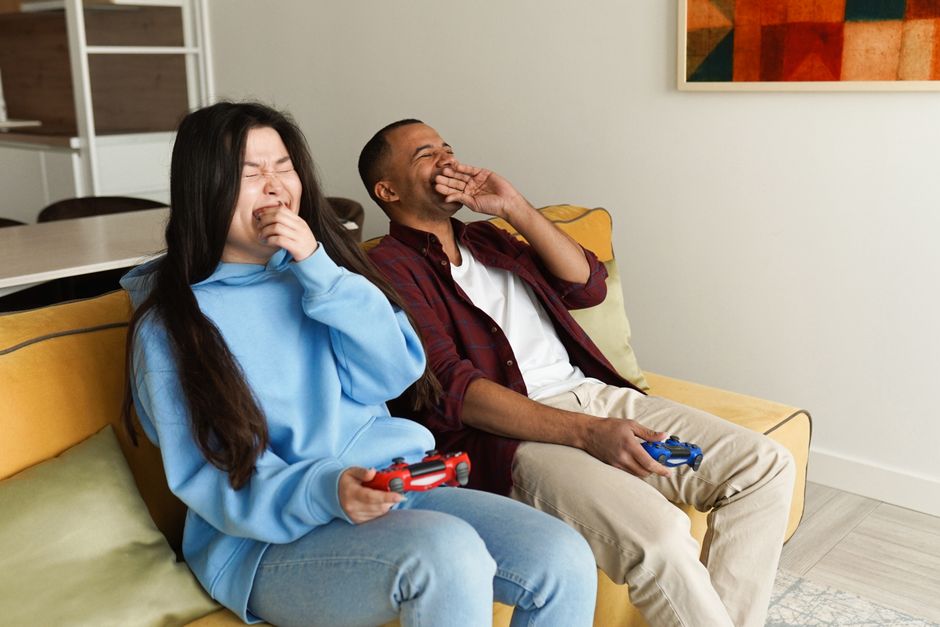
The Myth-Buster: Why We Need to Stop Glorifying the All-Nighter
My notebook is filled with a running list of “sleep myths” that I still hear repeating in Discord calls during roster negotiations. If you want to stop bleeding performance, stop believing these:
- Myth 1: "You can make up for sleep on the weekend." You can’t repay a sleep debt like a credit card. The cognitive deficit remains. Myth 2: "Some people are just 'night owls' and perform better." While chronotypes exist, the standard esports schedule shifts that circadian clock in a way that is inherently inflammatory and stress-inducing for the body. Myth 3: "Coffee/Energy drinks replace sleep." Stimulants mask the symptoms of fatigue; they do not fix the cognitive deficits. You are simply hyper-focused on the wrong things.
Designing the Optimal Practice Block
If you want a team that can out-think and out-execute the competition, you need to structure your practice blocks around the human body’s natural rhythm, not the streamer’s schedule. We need to move away from the "8 hours of straight scrims" model.
A Sample High-Performance Schedule
Time Block Activity Focus 10:00 - 12:00 Individual Mechanics/Warmup Low-stress, high-focus movement. 13:00 - 15:30 Scrim Block A (High Intensity) Macro-play, communication, and strategy. 15:30 - 16:30 Cognitive Recovery/Break Physical movement, no screens, nutrition. 16:30 - 19:00 Scrim Block B (High Intensity) Drafting, niche scenarios, and VOD review. 19:00 - 20:00 Debrief/Tactical Synthesis Ending the day on a constructive note.The goal here is to keep the team in the "flow state" zone while ensuring they finish at a time that allows for actual, restorative sleep. If your scrims are spilling into 1:00 AM, you are cannibalizing the next day’s performance. Every minute of spillover is a minute of recovery lost.
Recovery is Training, Not "Time Off"
One of the biggest issues in tier-2 rosters is the binary way players view their time: it's either "playing" or "doing nothing." That’s a dangerous mindset. In any professional sport, recovery is a component of training. If a player is sleeping, they are repairing the neural pathways that they practiced earlier that day. Sleep is where the mechanics are encoded into muscle memory.
When you force a player to sacrifice sleep for an extra hour of ranked queue, you are actively degrading their progress. You are deleting the work they just did. Stop telling players to "just optimize their routine"—that’s vague, lazy advice. Give them the autonomy to disconnect at a set time. Protect that time like you protect your team's tactical playbook.
The Path Forward: What Changes on Monday?
I ask this at every consulting meeting, and I ask it of you now: What changes on Monday?
If you continue to run your schedule based on the "grind culture" aesthetic, you will continue to see your rosters plateau. The most talented teams I have ever worked with were not the ones that spent the most time in the server; they were the ones that made every minute in the server count because their players were well-rested, mentally sharp, and cognitively capable of executing complex strategies under pressure.
Implement a strict "No Scrims After 9:00 PM" rule. Watch the quality of your comms in the final block of the day increase within one week. Prioritize "Cognitive Recovery" blocks. Treat these as non-negotiable. If your players aren't leaving their chairs for an hour between blocks, they aren't "grinding," they are stagnating. Track your wins against your sleep schedule. Stop guessing. Collect the data on your own team’s performance dips. Use the facts to convince your stakeholders that late-night practice is bad business.Esports is a mental game played on https://bizzmarkblog.com/the-silent-season-killer-why-your-grind-is-actually-hurting-your-mmr/ a digital stage. If your players' brains aren't functioning at peak capacity because you’ve sacrificed their circadian rhythm for the sake of an arbitrary "grind," you’re losing before the game even starts. Cut the spillover. Prioritize the recovery. Start winning on Monday.