If you have ever spent forty minutes on hold to book a routine check-up, you know the frustration of traditional healthcare administration. We live in an era where we can track a food delivery driver in real-time or manage our banking on a train, yet booking a GP (General Practitioner) appointment often feels like stepping back into the 1990s.
Patients are not asking for magic; they are asking for the same level of digital convenience they experience in every other facet of their lives. When we talk about digital health, we aren't talking about "revolutionary" technology that will change everything tomorrow. We are talking digital prescriptions UK about digitizing the mundane, repetitive tasks that cause the bottleneck in the first place.
Here is why digital services feel faster, and more importantly, why that speed is a tangible improvement for the patient experience.

1. The Death of the Phone-Based Bottleneck
The primary reason traditional routes feel slow is the reliance on synchronous communication. To book an appointment, you must call during specific hours, wait for a receptionist to become available, and then negotiate a time that works for both of you.
Faster appointment booking is achieved by moving to an asynchronous model. When a clinic implements an online booking system, the patient is removed from the queue. You are no longer waiting for a human to finish their lunch or handle another complex query. You interact with a digital interface that shows real-time availability.
This does not just benefit the patient. By removing the need for a receptionist to manually enter your details into an Electronic Health Record (EHR) system, you reduce the likelihood of transcription errors. When the patient enters their own data, the speed of the transaction increases significantly because the "middleman" is removed.
2. Virtual Consultations: Removing the Physical Friction
Traditional healthcare requires physical presence for everything. This includes travel time, parking, sitting in a waiting room, and the inevitable overrun of a clinic's schedule. A ten-minute appointment can easily consume two hours of your day.
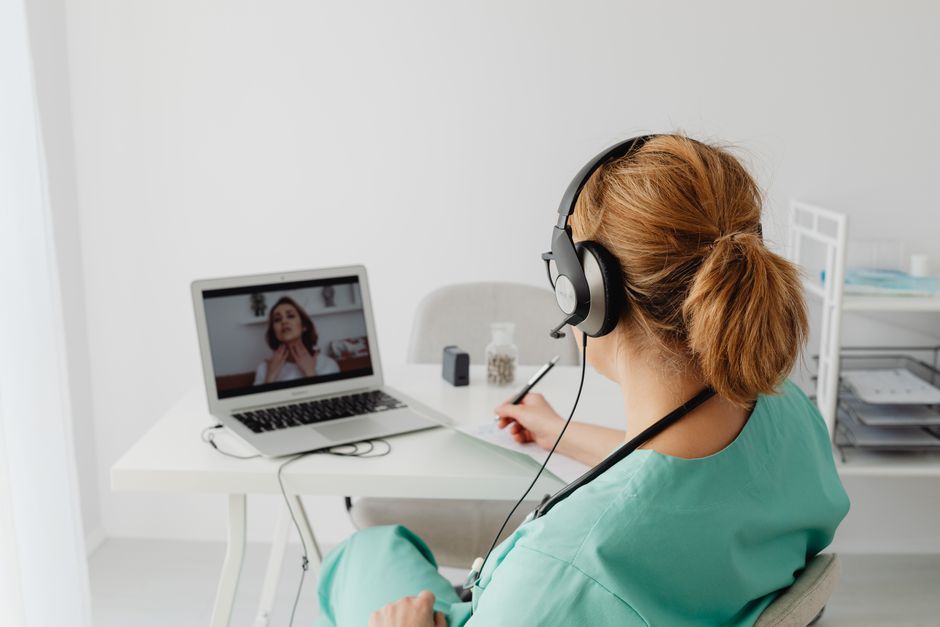
Virtual consultations, or telehealth, change the math entirely. When a consultation is conducted via a secure video link, the "wait" time is often reduced to logging in five minutes before the scheduled time. It is a more efficient use of both the clinician's time and the patient’s.
Does this work for everything? Absolutely not. You cannot perform a physical examination or a blood test through a laptop screen. However, for follow-ups, medication reviews, or discussing test results, virtual options are a massive step forward. It allows patients to access care without disrupting their workday, making healthcare feel integrated into life rather than an interruption to it.
3. Centralized Platforms: The Single Source of Truth
One of the most frustrating aspects of "traditional" healthcare is the fragmentation of information. You call to ask a question, and the staff member has to dig through a physical filing cabinet or a legacy computer system to find your history.
Digital health services utilize centralized platforms, often called Patient Portals. These are essentially secure dashboards where your data lives. When you log in, you see your upcoming appointments, your recent test results, and your previous prescriptions. This provides patient access to their own health data without needing to call the surgery or clinic for an update.
When you have a question, these portals often include secure messaging features. Instead of calling and leaving a message that might take 48 hours to be passed to a doctor, you send a direct, secure inquiry. The clinician reads it when they are between patients and replies. This asynchronous messaging is not just faster; it is significantly more accurate because there is a written record of the exchange.
4. Reduced Admin: The Invisible Efficiency
When we talk about reduced admin, patients often think this is only a benefit for the staff. That is a mistake. When staff are drowning in paperwork—scanning forms, filing physical notes, or chasing up incomplete registration details—the entire clinic slows down.
Digital intake forms allow patients to complete their medical history or update their address online before they even arrive. This means that when you check in, the staff isn't busy typing your name and address into a system; they are confirming that you are there and directing you to the clinician. The "admin" moves from being a reactive, stressful manual task to a proactive, automated one.
Comparison: The Patient Journey
To see how these small changes add up, let’s look at a typical interaction comparison. Please note that "traditional" is defined here as a paper-heavy, phone-reliant clinic, while "digital" assumes a standard modern patient portal and booking system.
Action Traditional Route Digital Route Booking an appointment Phone call, hold time, manual scheduling. Online portal, instant confirmation. Updating personal info Paper form at reception, staff data entry. Update via portal, synced to EHR. Waiting for results Call the clinic and wait for a callback. Check portal dashboard anytime. Routine follow-up In-person travel, waiting room time. Secure video consult from home/work.What actually changes for you next week?
I hear a lot of buzz about "the future of AI in medicine." While that is interesting, it is not what you need to worry about right now. If your clinic rolls out a new digital tool next week, here is what you should expect to see change in your daily life:
- Visibility: You stop asking "Do they have my record?" because you can see your data in the portal. Agency: You no longer have to ask permission to book a routine slot; you choose the slot that fits your calendar. Continuity: Your messages and notes are kept in one thread, meaning you don't have to re-explain your symptoms to every person you speak to.
The speed doesn't come from "hyper-speed" technology; it comes from removing the friction caused by outdated, paper-based workflows. It is about letting the computer do the boring bits—like scheduling and data entry—so that the human beings (the doctors and nurses) can focus on the patient.
The Verdict: Is it better, or just different?
For most patients, it is unequivocally better. The primary barrier to accessing health services is rarely the clinical encounter itself; it is the administrative hoops you have to jump through to get there. By automating those hoops, we aren't just saving time—we are reducing the barrier to care.
If you are frustrated with your clinic's speed, the best way to book GP appointment question to ask your local health service is not "When will you have advanced AI?" The question is "When will you provide a patient portal where I can book and message online?" That simple change is the single biggest "faster" improvement a clinic can make, and it is entirely achievable with today's technology.
Healthcare providers, take note: if you want to improve patient satisfaction, stop promising "the future" and start fixing the phone lines.